

Is a 10-Year Interest-Only Mortgage Worth the Lower Payment?
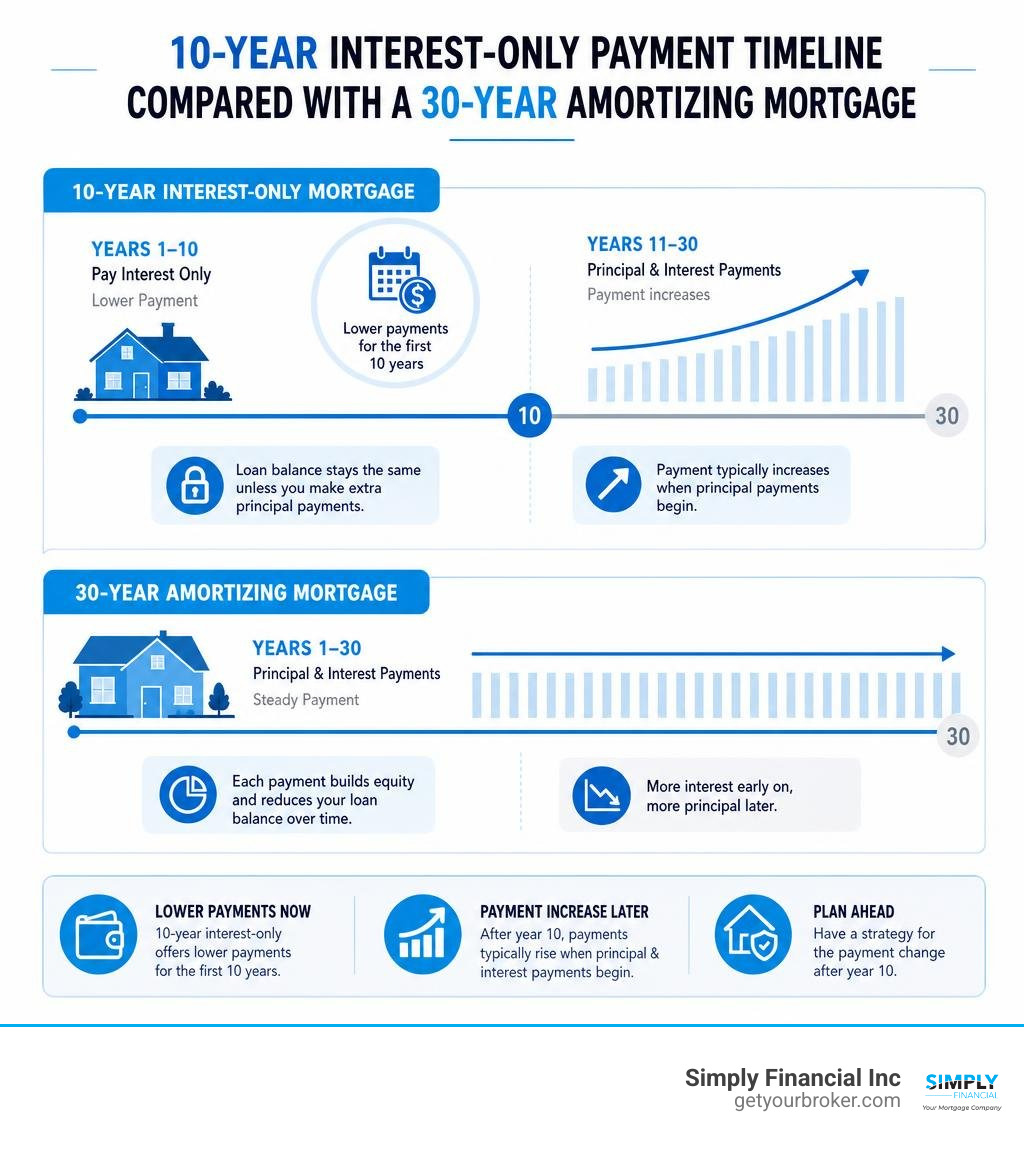
A 10 year fixed rate interest only mortgage lets you pay only the interest for the first 10 years, usually at a fixed rate. Your required payment is lower, but your loan balance does not go down unless you make extra principal payments.
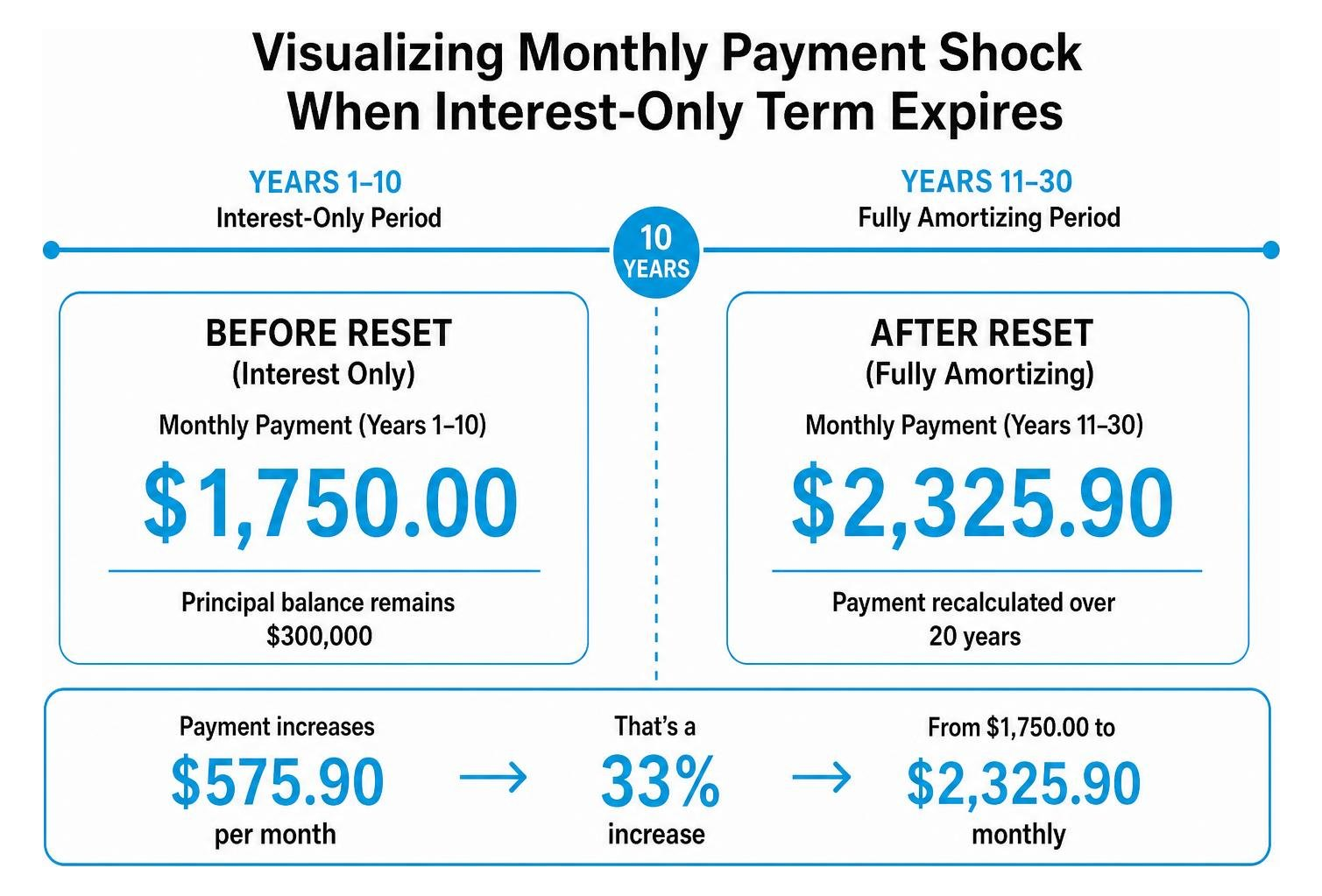
After year 10, the remaining balance typically must be repaid over the final 20 years. That can create a sharp payment increase. For example, on a $300,000 loan at 7%, the interest-only payment is about $1,750 a month. When 20-year principal-and-interest payments begin, it can rise to roughly $2,326 a month.
This structure can help borrowers with uneven income, a planned bonus, or a clear sale or refinance plan. For most buyers who want steady payments and growing home equity, a standard 30-year principal-and-interest mortgage is the safer path.
I am Peter Babjak of Simply Financial Inc, a Chicago mortgage broker with more than 18 years of experience helping buyers and homeowners compare loan structures, including a 10 year fixed rate interest only mortgage. The key is not just qualifying for the lower payment today, but having a realistic plan for what comes next.
Understanding How a 10 Year Fixed Rate Interest Only Mortgage Works
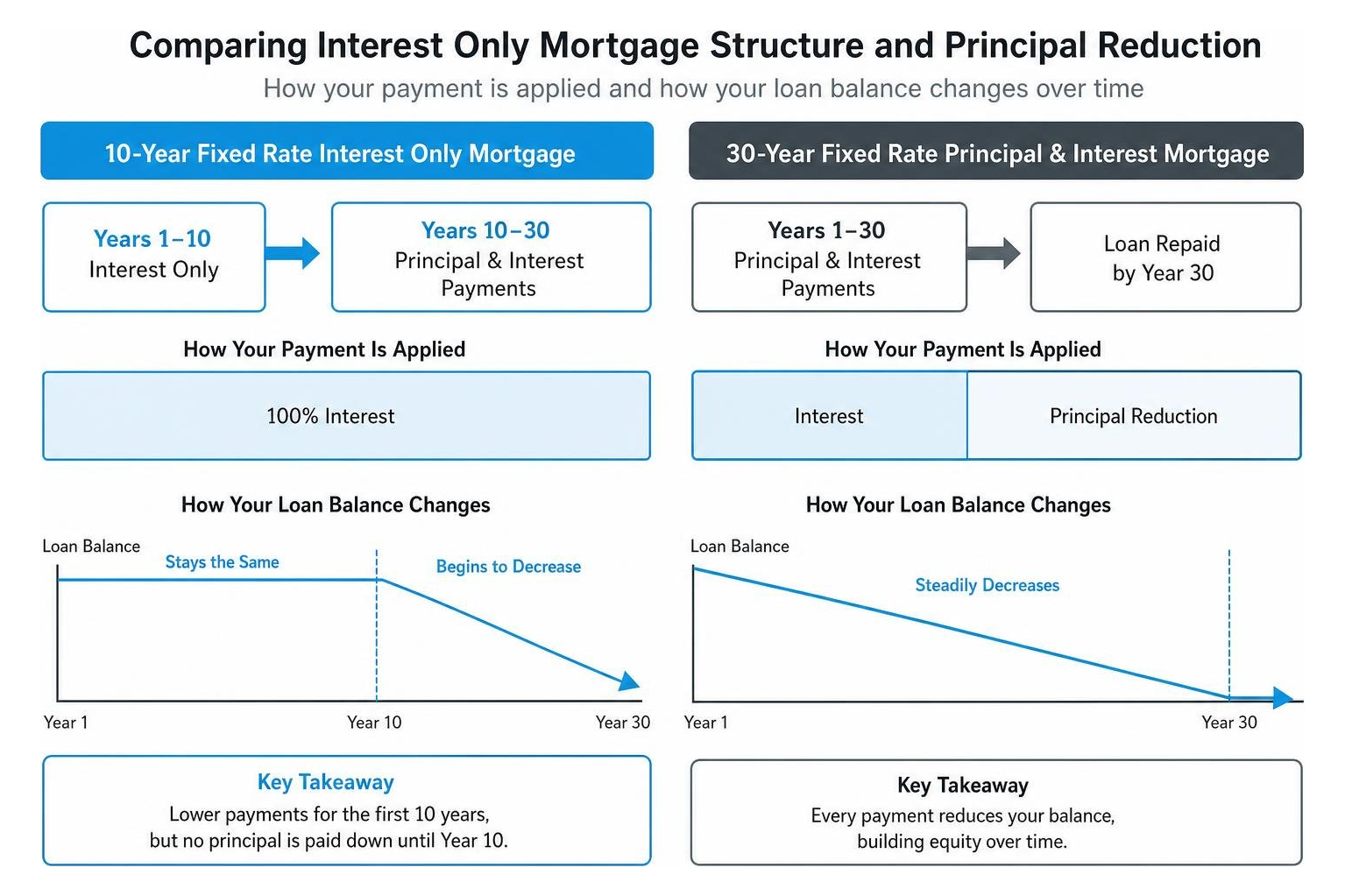
When you purchase a home with a standard amortizing loan, every monthly payment is divided into two distinct buckets: principal reduction and interest charges. In the beginning, the bank claims the lion’s share of your payment for interest, but a modest slice steadily chips away at your loan balance.
An interest-only (IO) mortgage completely removes that principal slice for a predetermined timeframe. During this window, your required monthly payment covers exclusively the interest accrued on the principal balance. Because you are not paying down the borrowed balance, your monthly debt service remains notably lower.
In the broader lending landscape of August 2026, interest-only options remain a specialized niche. In 2025, interest-only loans represented just 0.8% of all new mortgage originations across the United States—a dramatic shift from the 2.1% market share recorded prior to the 2008 financial crisis. Lenders carefully structure these non-conforming products to ensure borrowers understand the long-term trade-offs. To review how traditional fixed options operate across varying terms, explore our comprehensive Fixed rate mortgage guide 2026.
Mechanics of a 10 Year Fixed Rate Interest Only Mortgage
A 10-year fixed IO loan is structured over a total 30-year lifecycle divided into two distinct operational phases:
- The 10-Year Fixed Interest-Only Phase (Months 1–120): During the initial decade, your interest rate is locked, and your minimum required payment is calculated strictly on the outstanding balance. Calculating this payment is straightforward: multiply the loan balance by the annual note rate and divide by 12. For example, on a $300,000 balance at 7% APR, the monthly interest payment is exactly $1,750.
- The 20-Year Amortization Phase (Months 121–360): Once year ten concludes, the interest-only window closes permanently. The entire original principal must now be fully repaid over the remaining 20 years (240 monthly payments). Because you have a compressed timeline to pay off the entire balance, your monthly payment resets upward substantially.
It is worth noting that interest-only mortgages typically carry an interest rate premium of 0.25% to 0.50% higher than traditional amortizing loans. Lenders charge this margin because carrying an unamortized loan balance exposes the institution to prolonged credit risk. Using tools like the Interest Only Calculator: Monthly Interest Payment provides clear visibility into how these baseline interest numbers translate to your monthly cash flow.
Lender Requirements and Eligibility Standards
Because Fannie Mae and Freddie Mac do not purchase non-amortizing residential loans on the secondary market, 10-year IO mortgages are primarily issued as non-conforming portfolio products or Non-QM (non-qualified mortgage) loans. As a result, only about 12% of mortgage lenders offer interest-only products in 2026.
Underwriting guidelines for these specialized products are considerably stricter than conventional agency loans:
- Credit Score Standards: While conventional financing allows scores down to 620, interest-only underwriting generally demands a minimum credit score of 700, with many lenders preferring 720 to 740+.
- Substantial Equity / Down Payment: Expect a mandatory down payment of at least 20% to 25% on purchase loans, compared to just 3% to 5% for standard conventional programs.
- Liquid Asset Reserves: Lenders often require 12 to 24 months of post-closing liquid reserves (covering principal, interest, taxes, and insurance) held in verified accounts.
- Conservative Debt-to-Income (DTI) Ratios: Underwriters typically calculate your qualifying DTI using the projected fully amortized 20-year payment rather than the introductory interest-only payment, ensuring you can manage the future reset.
If you are weighing these requirements against traditional financing structures, you can check prevailing benchmarks for 10-year conforming mortgage rates to see how standard amortizing products compare.
Financial Comparison: 10-Year Interest-Only vs. 30-Year Traditional Amortization
The central appeal of an interest-only structure is upfront cash savings, but looking at total loan costs reveals a very different economic picture over time.
To examine the numbers objectively, let us compare a $300,000 loan balance structured as a 10-year fixed IO mortgage against a traditional 30-year fixed principal-and-interest (P&I) mortgage. As documented in the Interest Only Mortgage vs Principal and Interest Comparison – Mortgage Data Index, the rate differential and deferred principal create diverging financial paths.
| Loan Feature | 10-Year Fixed Interest-Only (30-Yr Total) | Standard 30-Year Fixed (P&I) |
|---|---|---|
| Loan Amount | $300,000 | $300,000 |
| Illustrative Interest Rate | 7.00% APR | 6.50% APR |
| Monthly Payment (Years 1–10) | $1,750.00 (Interest Only) | $1,896.20 (P&I) |
| Monthly Payment (Years 11–30) | $2,325.90 (Fully Amortizing) | $1,896.20 (Unchanged) |
| Principal Balance at Year 5 | $300,000 | $279,850 |
| Principal Balance at Year 10 | $300,000 | $248,320 |
| Equity Built via Payments (Year 10) | $0 | $51,680 |
| Total Cumulative Interest Paid (30 Yrs) | $468,216 | $382,633 |
| Total Lifetime Cost (Principal + Interest) | $768,216 | $682,633 |
Across the first decade, the interest-only borrower saves roughly $146 per month in required debt service. However, the cumulative cost savings illusion lasts roughly 14 years before standard principal and interest loans permanently become cheaper overall. Over the full 30-year lifecycle, the interest-only borrower pays over $85,000 more in cumulative interest on this balance because the principal was never reduced during the first ten years.
The Payment Shock Factor After Year 10
The most significant financial milestone of a 10-year IO mortgage occurs at month 121. When the interest-only period ends, your monthly payment jumps immediately to account for 20-year amortization.
Assuming interest rates remain completely static at 7%, your monthly housing payment jumps from $1,750 to $2,325.90—a mandatory 33% increase overnight. If the loan transitions to an adjustable rate or if prevailing market rates have risen, the payment surge can easily exceed 40% to 60%.
Many borrowers anticipate refinancing their loan before year ten arrives. However, historical mortgage data reveals that while roughly 94% of interest-only borrowers initially report plans to sell or refinance before their reset window, only about 34% actually do. If local property values decline or income changes occur, qualifying for a new loan can become challenging. Monitoring broader market trends, such as current 10-year home loan rates, helps you evaluate your refinancing landscape well ahead of maturity.
Equity Building and the True Cost Gap
A traditional mortgage acts as a forced savings mechanism. With each monthly payment, you purchase a fraction of your property back from the lender. After 10 years of consistent amortizing payments on a $300,000 loan, a homeowner accumulates over $51,000 in direct home equity strictly through loan paydown, independent of market appreciation.
Under a 10-year interest-only loan, your equity accumulation via debt paydown remains exactly zero. If local real estate values remain flat over that decade, you own no more of the property in year ten than you did on closing day. For homeowners looking to build long-term personal net worth without market speculation, committing to an amortizing 10-year fixed mortgage or standard 30-year loan provides guaranteed debt reduction.
Strategic Pros, Cons, and Alternative Financing Options
While an interest-only mortgage is not suitable as a tool to stretch personal home affordability, it can serve as an effective cash-flow vehicle for specific financial strategies.

Who Benefits Most from a 10 Year Fixed Rate Interest Only Mortgage?
- Commission and Bonus-Compensated Professionals: High-earning sales executives, attorneys, or corporate leaders whose annual earnings arrive in large, irregular distributions often use IO structures to keep mandatory monthly living costs minimal, applying lump-sum windfalls toward principal as bonuses land.
- Strategic Real Estate Investors: Real estate investors purchasing rental properties in high-growth Florida or Illinois markets may use IO structures to maximize immediate monthly cash flows, directing surplus rental income toward property improvements or alternative acquisitions.
- High-Yield Wealth Accumulators: Disciplined investors whose investment portfolios reliably produce post-tax yields higher than their mortgage note rate may choose to keep capital active in financial markets rather than locking liquidity into home equity.
- Short-to-Mid-Term Transitional Owners: Buyers who know with absolute certainty that they will relocate, downsize, or sell the property within 5 to 7 years can capitalize on reduced initial payments without ever facing the year-10 payment reset.
For borrowers exploring diverse financing structures, reviewing our comprehensive Mortgage loan options guide 2026 offers clarity on how portfolio loans compare to mainstream products.
Managing Refinance Risk and Prepayment Strategies
Borrowers managing a 10-year IO mortgage can actively mitigate long-term interest costs through intentional prepayment strategies.
Most non-conforming interest-only mortgages permit penalty-free principal prepayments. When you make an additional principal payment during an interest-only window, your lender recalculates your next monthly payment based on the newly reduced principal balance. For instance, if you apply a $30,000 lump sum to your $300,000 loan at 7%, your required monthly payment drops from $1,750 down to $1,575 the following month.
Conversely, relying on refinancing as an exit strategy carries inherent risks:
- Interest Rate Volatility: If market rates rise significantly over the 10-year span, refinancing into a new 30-year fixed loan could result in a higher interest rate than your starting loan.
- Underwriting Guideline Shifts: Lending guidelines evolve. A change in personal employment, business structure, or debt obligations could complicate future approvals. If credit profiles change, reviewing Current mortgage rates for FHA loans can provide alternative amortizing options to maintain stability.
Frequently Asked Questions About 10-Year Interest-Only Loans
What happens when the 10-year interest-only period ends?
When the 120-month interest-only window concludes, your loan automatically enters its fully amortizing repayment phase. The remaining principal balance is amortized over the final 20 years of the 30-year term. Because you must pay off the full balance in 240 months rather than 360, your required monthly payment will increase substantially. Some non-standard portfolio notes may feature a balloon payment requiring full payoff at year ten, making it vital to review your promissory note carefully.
Can you pay down principal during the 10-year interest-only window?
Yes. Most modern interest-only mortgages allow voluntary, penalty-free principal reductions at any time. When you make extra principal payments during the interest-only phase, your required monthly payment adjusts downward on the next billing cycle because the monthly interest is calculated against the smaller balance. You can model these scenarios and calculate adjustments using the interactive Interest Only Mortgage Calculator.
How does a 10-year interest-only mortgage compare to a HELOC?
A Home Equity Line of Credit (HELOC) is a revolving second mortgage that typically includes a 10-year interest-only draw period followed by a 20-year repayment phase. However, HELOCs feature variable interest rates tied to the Prime Rate, meaning your monthly payment fluctuates whenever benchmark rates change. A 10-year fixed interest-only mortgage provides rate stability with a locked interest rate for the entire decade.
Conclusion
A 10-year interest-only mortgage is a sophisticated liquidity tool rather than an everyday home financing shortcut. While it provides lower initial monthly payments and cash-flow agility, it defers principal reduction and results in higher overall borrowing costs over a 30-year horizon.
Choosing the right mortgage structure depends on your career trajectory, cash-flow predictability, and broader wealth goals. At Simply Financial Inc, located at 5632 W Lawrence Ave in Chicago, IL, we help homeowners across Illinois and Florida evaluate their financing strategies with clear numbers and expert guidance.
Whether you are evaluating specialized portfolio structures or seeking the long-term stability of traditional fixed rate mortgage options, our team is here to help you move forward with confidence.