

FHA Mortgage Interest Rates in October 2026: What Buyers Need to Know
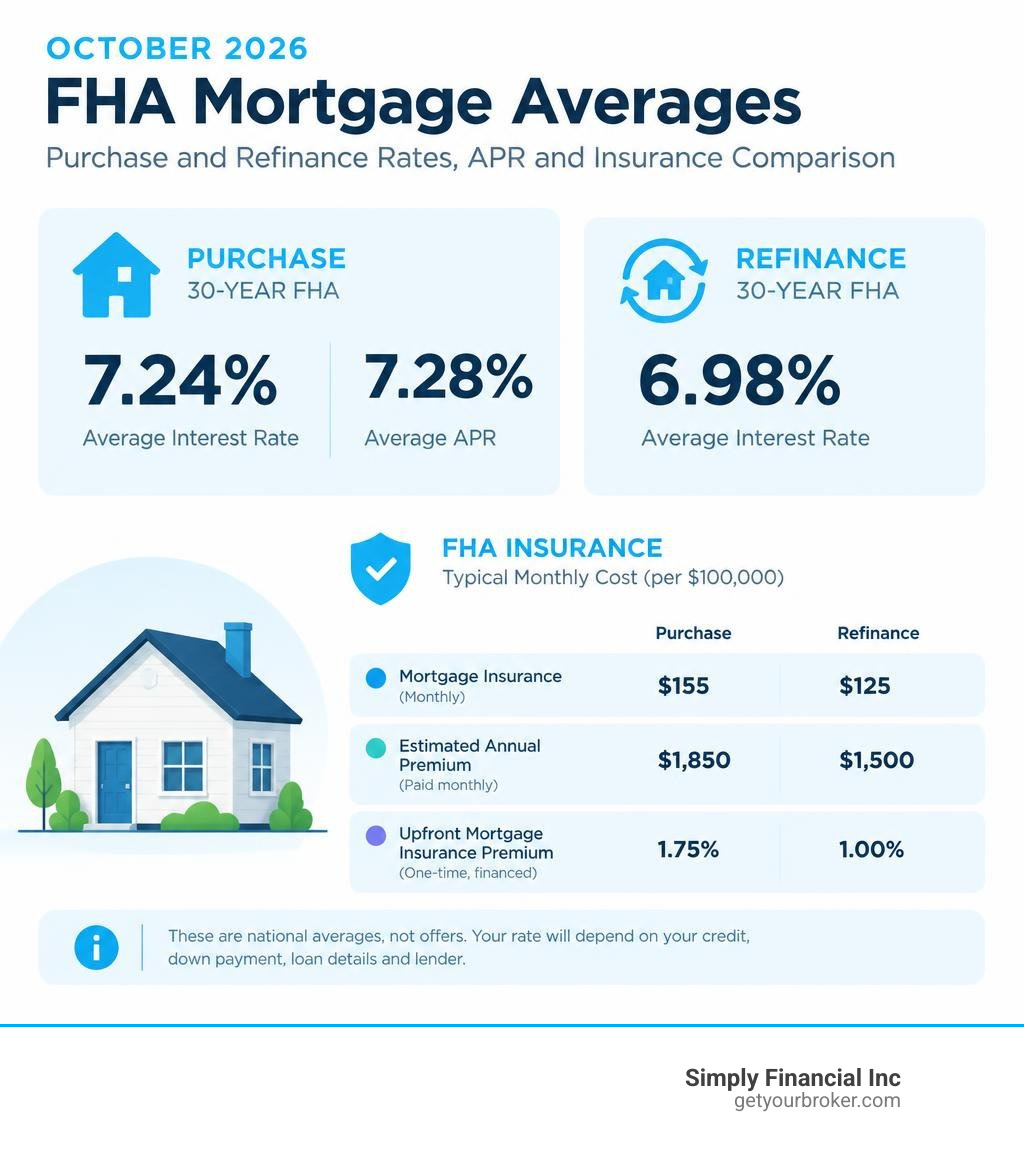
The average 30-year FHA mortgage interest rate is 7.24% as of October 10, 2026, with an average APR of 7.28%. The average FHA refinance rate is 6.98%. These are national averages, not offers: your rate will depend on your credit, down payment, loan details, and lender.
An FHA loan can make it easier to buy with a smaller down payment or less-than-perfect credit. But a lower rate does not always mean a cheaper loan. Compare FHA and other government-backed options when eligible, and include mortgage insurance, points, and closing costs.
I’m Peter Babjak of Simply Financial Inc, a Chicago mortgage broker helping homebuyers and homeowners navigate loans and refinancing. Since 2007, our team has helped borrowers look beyond the FHA mortgage interest rate to understand the full cost of financing.
Current FHA Mortgage Interest Rate Benchmarks in October 2026
The mortgage landscape in October 2026 has shown notable movement, keeping homebuyers and refinancing households on their toes. When we look at official data tracked via the 30-Year Fixed Rate FHA Mortgage Index (OBMMIFHA30YF), benchmark yields reflect active shifts across the broader debt markets.
As of October 10, 2026, the national average 30-year purchase note rate sits at 7.24% with an effective APR of 7.28%. Meanwhile, the national average 30-year refinance interest rate stands at 6.98% (7.04% APR). Keeping an eye on current mortgage rates for FHA 30-year fixed financing is essential because daily swings of 10 to 25 basis points can noticeably change your monthly budget.
30-Year vs. 15-Year Fixed FHA Rates
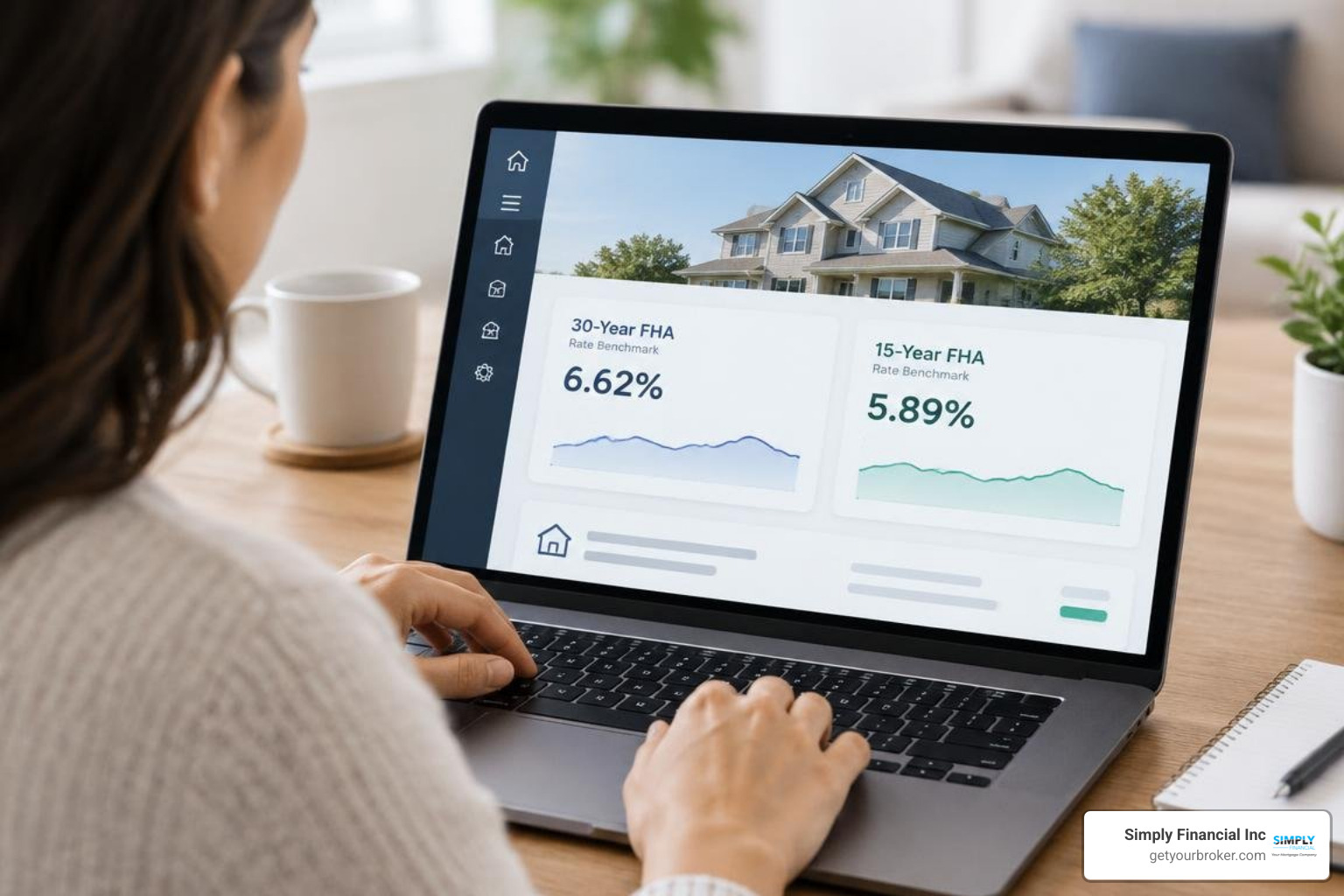
Choosing between a 30-year and a 15-year fixed loan comes down to a balance between immediate cash flow and lifetime interest savings.
- 30-Year Fixed Loans: Provide the lowest required monthly principal-and-interest payment, spreading the balance over 360 payments. This term gives buyers maximum monthly breathing room.
- 15-Year Fixed Loans: Feature lower nominal rates—often dipping near 6.125% among competitive pricing structures—accelerating amortization and saving tens of thousands in overall interest.
For borrowers aiming to build home equity quickly without getting bogged down by three decades of interest, exploring FHA 15-yr rates presents an efficient alternative.
Purchase vs. Refinance Rate Dynamics
Purchase mortgages and refinance structures often move on slightly separate tracks due to differing risk assessments and investor demand:
- Rate-and-Term Refinancing: Refinance rates have recently averaged slightly below purchase rates (6.98% note rate versus 7.24% for standard purchases), opening doors for borrowers with older, high-rate debt to reduce their financing charges.
- Streamline Refinances: FHA-to-FHA streamline options reduce documentation burdens for eligible borrowers seeking lower rates without full re-appraisals.
- Cash-Out Refinances: Cash-out transactions carry pricing adjustments that generally make their interest rates slightly higher than standard rate-and-term transactions.
According to the October 7, 2026 | Lowest FHA Fixed Purchase Rate Holds at 6.125% benchmark update, pricing spreads among institutional loan programs continue to fluctuate, demonstrating why assessing total closing costs alongside nominal rates matters.
How Mortgage Insurance Premiums Impact Your Total Borrowing Cost
A common misconception is that the advertised note rate is all you need to look at. With government-backed financing insured by the Federal Housing Administration (FHA), mortgage insurance premiums (MIP) play a central role in your bottom-line monthly payment.
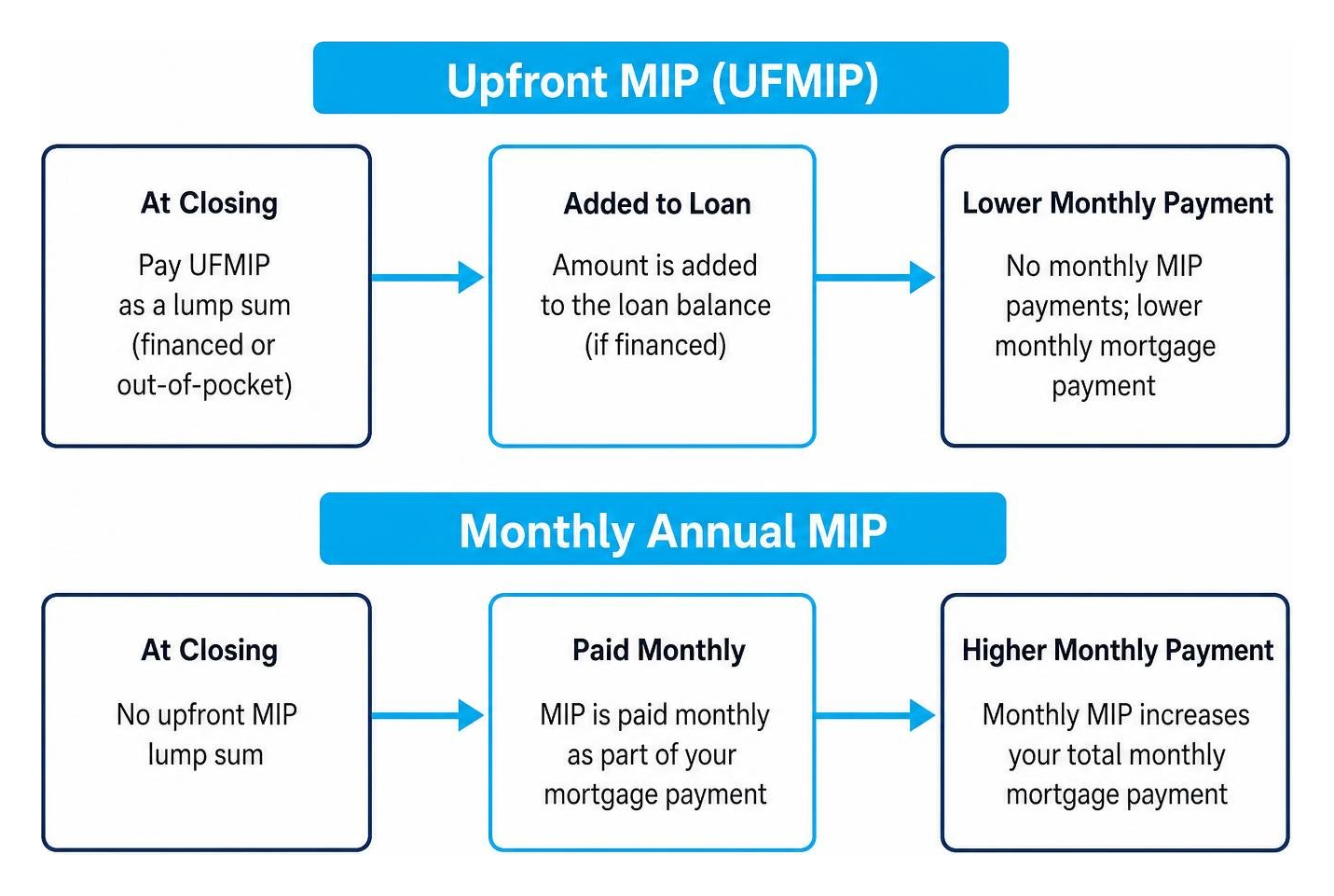
Understanding the APR on FHA loan terms is vital because the APR rolls the interest rate, upfront fees, and ongoing insurance into a single annualized percentage.
Upfront MIP vs. Monthly MIP
FHA loans require two distinct insurance components:
- Upfront Mortgage Insurance Premium (UFMIP): A mandatory fee equal to 1.75% of the base loan amount. This is typically financed into the total mortgage balance at closing rather than paid out of pocket. For example, on a $300,000 base loan, $5,250 is added to the balance, making the starting loan $305,250.
- Annual (Monthly) Mortgage Insurance Premium: An ongoing fee calculated as an annual percentage of your outstanding balance, divided across your 12 monthly payments. Depending on the loan term, balance, and original loan-to-value (LTV) ratio, this premium ranges between 0.45% and 1.05% annually (commonly 0.55% for standard 30-year purchase loans with minimum down payments).
Duration and Cancellation Guidelines
Unlike private mortgage insurance (PMI), which typically drops automatically when a loan balance reaches 78% of the home’s original value:
- Down payments under 10%: The annual MIP remains for the entire life of the loan.
- Down payments of 10% or more: The annual MIP cancels automatically after 11 years.
Because of the life-of-loan rule for small down payments, many borrowers choose to refinance once they build substantial home equity.
Key Elements That Shape FHA Loan Pricing
Lenders do not pick interest rates at random. Your specific quote reflects a mix of personal financial indicators and broader macroeconomic forces.

Reviewing historical FHA loan rate trends reveals how both borrower risk profiles and economic cycles influence daily mortgage quotes.
Factors That Determine Your FHA Mortgage Interest Rate
When evaluating your file, lenders review specific criteria:
- Credit Score: The FHA allows minimum scores of 580 for 3.5% down payment options (and down to 500 with 10% down). However, higher scores within the 620–680+ range unlock significantly more competitive pricing adjustments.
- Down Payment: Putting down more than the standard 3.5% reduces lender risk, which can positively impact your rate and reduce annual MIP costs.
- Debt-to-Income (DTI) Ratio: While FHA guidelines offer flexibility—often permitting DTIs up to 43% or higher with compensating factors—a lower DTI helps ensure smooth underwriting.
Fulfilling these foundational FHA loan rate requirements ensures you receive the most favorable quotes available.
Broader Market Conditions and Lender Margins
Beyond personal credit profiles, wider economic mechanisms drive base borrowing rates:
- 10-Year Treasury Yields: Mortgage rates closely follow movements in the 10-year U.S. Treasury bond yield rather than overnight central bank lending targets.
- Inflation Pressures: When inflation runs hot, fixed-income yields rise, pushing mortgage rates up across the board.
- Lender Margins: Secondary market investor appetite and operational margins cause slight rate differences from one mortgage provider to another.
Comparing Government-Backed Mortgage Options
Understanding how FHA loans compare to other programs helps clarify whether government-backed financing matches your specific homeownership goals.
| Feature / Metric | FHA Loans | VA Loans | USDA Loans |
|---|---|---|---|
| Minimum Down Payment | 3.5% (with 580+ credit) | 0.0% (for eligible military/veterans) | 0.0% (in eligible rural/suburban areas) |
| Mortgage Insurance | Upfront (1.75%) + Monthly MIP | None (One-time funding fee applies) | Upfront guarantee fee (1.0%) + Annual fee (0.35%) |
| Credit Flexibility | High (Down to 500–580) | Moderate to High (Set by lender) | Moderate (Typically 640+ for automated underwriting) |
| Typical Oct 2026 30-Yr Rates | ~6.78% – 7.24% | ~6.72% – 7.17% | ~6.75% – 7.20% |
| Appraisal Requirements | Strict HUD safety standards | Strict VA safety standards | Strict USDA safety and property standards |
How Your FHA Mortgage Interest Rate Compares to VA Options
For eligible military service members, veterans, and surviving spouses, VA loans offer significant structural advantages:
- Zero Down Payment: VA loans do not require any down payment.
- No Ongoing Monthly Insurance: VA loans carry no monthly mortgage insurance premium, saving hundreds each month.
- Competitive Base Rates: Base note rates on VA loans frequently match or sit slightly below FHA rates, making them exceptionally cost-effective for those who qualify.
Who Benefits Most from an FHA Mortgage
An FHA mortgage is particularly advantageous for:
- First-Time Homebuyers: Borrowers who need a lower down payment threshold (3.5%) while keeping initial cash outlays manageable.
- Buyers Rebuilding Credit: Households with credit scores in the 580 to 660 range that would face steep pricing penalties or denial under stricter underwriting standards.
- Borrowers with Higher DTIs: Buyers whose debt ratios sit above standard program limits but who possess reliable, verifiable income.
Strategic Steps to Shop and Lock the Best Loan Terms
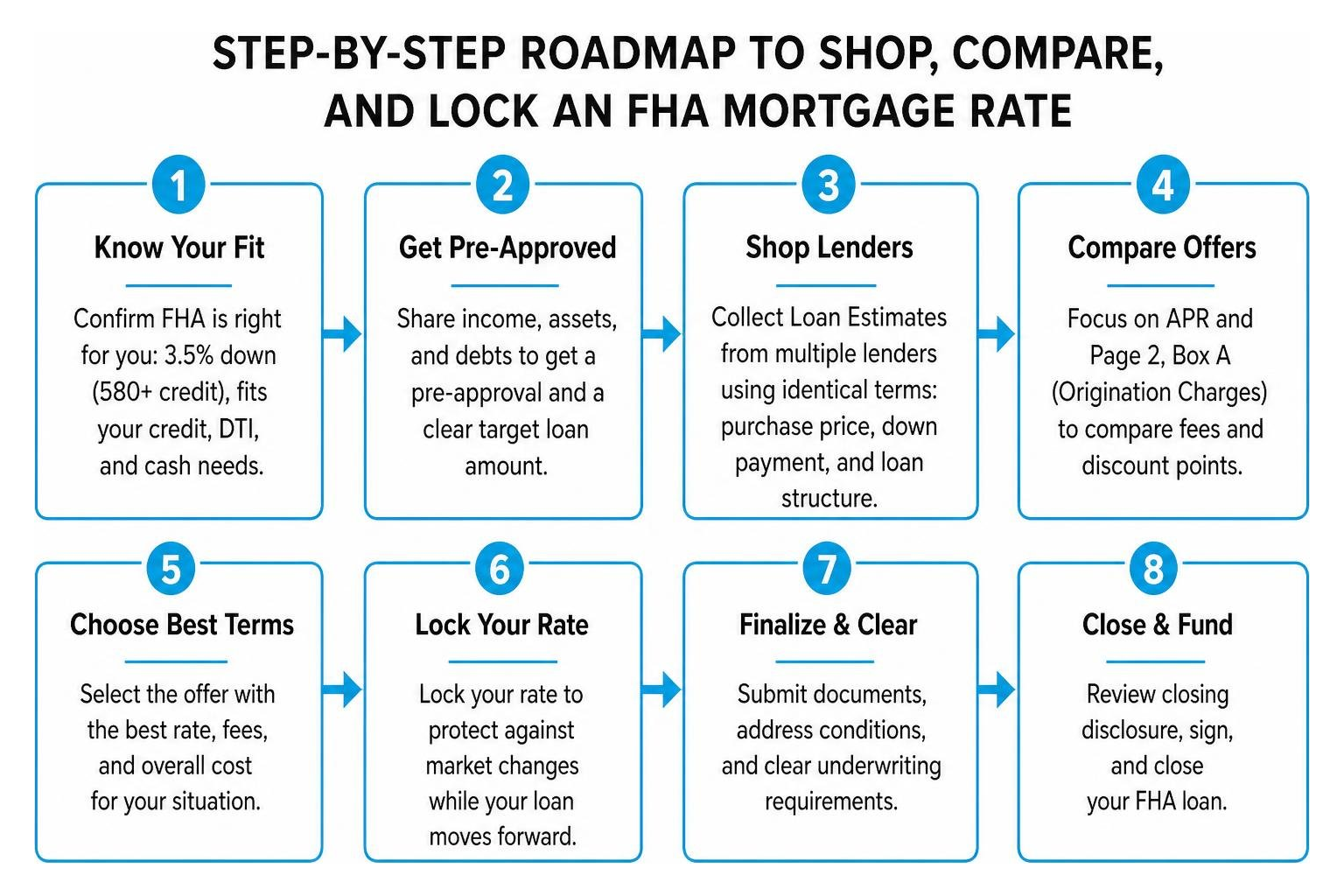
Securing an advantageous mortgage rate requires proactive comparison rather than accepting the first offer you receive. Finding the best FHA rates today is a matter of clear shopping habits.
Comparing Lenders and Understanding Loan Estimates
When shopping for financing, always request formal Loan Estimates using identical parameters (purchase price, down payment, and loan structure).
- Focus on APR and Box A: Look at Page 2, Box A (Origination Charges) to see actual lender fees and discount points.
- Evaluate Points Carefully: Paying discount points lowers your interest rate upfront, but ensure your planned stay in the home exceeds the break-even point on those initial fees.
- Compare at Least Three Sources: Checking multiple sources provides clear visibility on competitive margins and closing cost differences.
Deciding Between Locking Now or Floating Your Rate
Once your purchase agreement is active, you face a strategic choice: lock your rate or let it float.
- Rate Lock (30 to 60 Days): Guarantees your agreed interest rate through closing, protecting your monthly payment against unexpected market spikes.
- Floating: Allows your rate to move with daily market conditions until closer to closing.
Trying to time the market perfectly can be a bit of a fool’s errand. If your quoted payment fits comfortably within your household budget, locking provides certainty and eliminates last-minute closing surprises.
Frequently Asked Questions about FHA Mortgage Rates
What is the average 30-year FHA rate in October 2026?
As of October 10, 2026, the national average 30-year fixed FHA mortgage interest rate is 7.24%, with an average APR of 7.28%. Specific quotes vary depending on borrower credit score, down payment, points paid, and local market factors.
How does credit score influence FHA borrowing costs?
While the FHA program permits approvals down to a 580 credit score with 3.5% down (and 500 with 10% down), higher scores qualify for reduced lender risk adjustments. A score of 640 or higher generally secures more favorable base note rates and lower origination costs.
Can you remove mortgage insurance from an FHA loan?
For loans originated with less than a 10% down payment, annual MIP remains for the life of the loan. If you put down 10% or more at purchase, MIP cancels automatically after 11 years. Borrowers wishing to eliminate MIP earlier typically refinance into a different loan program once their property reaches at least 20% equity.
Conclusion
Navigating mortgage financing doesn’t need to be overwhelming. At Simply Financial Inc, we believe that understanding your options—from nominal rates and discount points to mortgage insurance rules—is the clearest path to confident homeownership.
Whether you are purchasing your first home or exploring refinancing opportunities in Illinois or Florida, our team provides transparent, expert guidance every step of the way. Explore current mortgage rates for FHA loans with us today and let us help you find the right financing for your budget.